
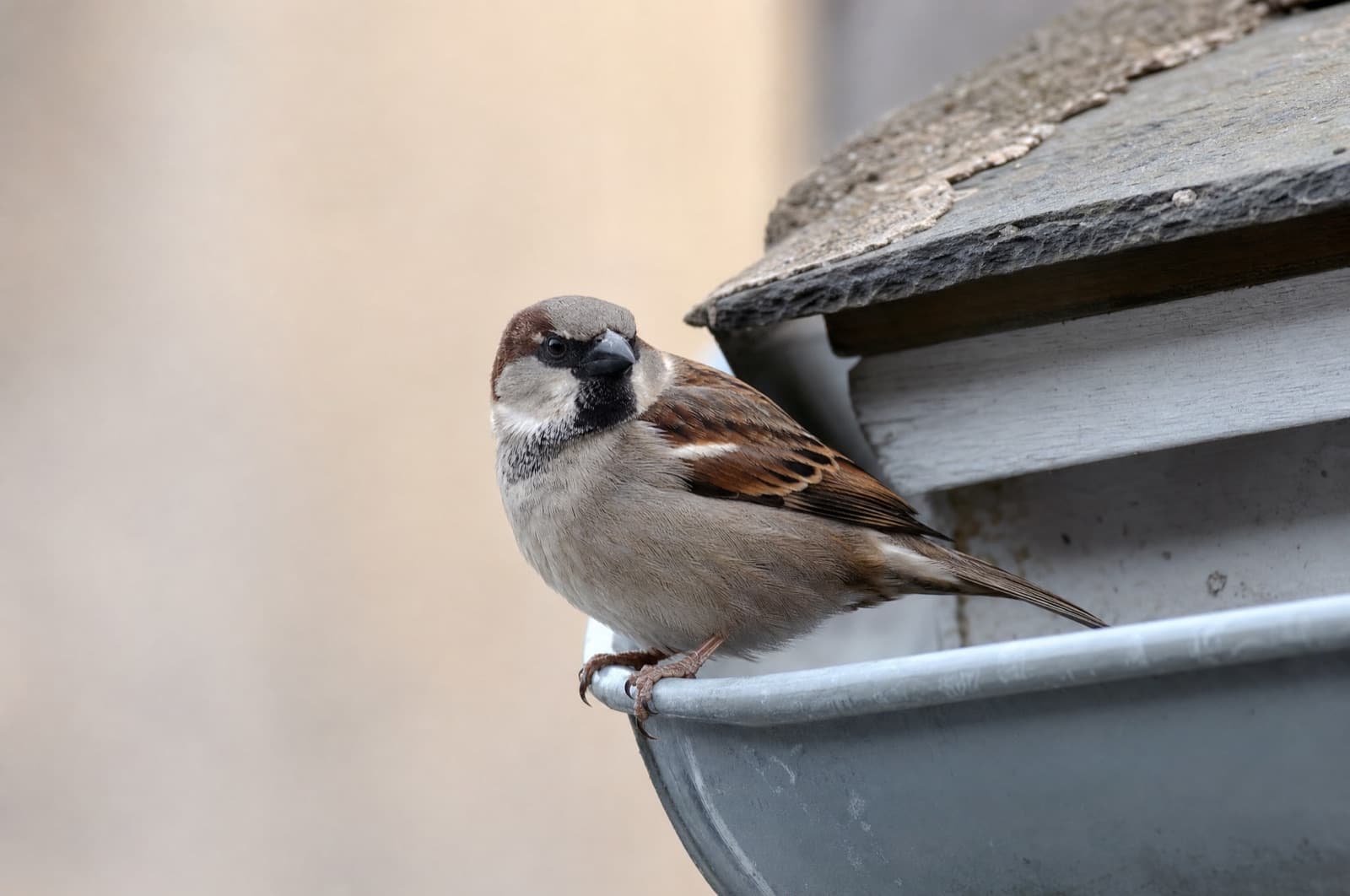
When Do Birds Nest? NH Timing & Legal Guide
At a glance
- Legal status: Only house sparrow, starling, and feral pigeon are unprotectedNative birds are protected under the Migratory Bird Treaty Act — USFWS
- Penalty: Substantial fines and/or up to 6 months imprisonmentMBTA violation, 16 U.S.C. §707(a) — Federal Register / USFWS
- Nesting season: House sparrows and starlings nest ~April–August, into SeptBulk of nest-building happens in spring — NestWatch / The Raptor Trust
- Prevention window: Seal vents and gutters in early MarchStarlings scout nest sites March–April — NestWatch
Legal status
Only house sparrow, starling, and feral pigeon are unprotected
Native birds are protected under the Migratory Bird Treaty Act — USFWS
Penalty
Substantial fines and/or up to 6 months imprisonment
MBTA violation, 16 U.S.C. §707(a) — Federal Register / USFWS
Nesting season
House sparrows and starlings nest ~April–August, into Sept
Bulk of nest-building happens in spring — NestWatch / The Raptor Trust
Prevention window
Seal vents and gutters in early March
Starlings scout nest sites March–April — NestWatch
The short of it
Pest birds nest from roughly March through August and roost in NH vents, eaves, and dryer vents all winter — but only house sparrows, starlings, and feral pigeons may legally be removed; native nests are federally protected.
When are they active — the whole year at a glance
Nesting activity concentrates in spring, but the three common pest birds never fully leave New Hampshire structures — they simply shift from nesting to winter roosting.
Best window to act · Early March, before nesting begins — seal dryer, stove, and exhaust vents, gutters, and eave gaps with hardware cloth or commercial vent covers (mesh guides: roughly ¾-inch for sparrows, 1⅛-inch for starlings, 2½-inch for pigeons). Sealing by late winter beats evicting an active nest later in the season.
Peaks track spring nesting (April–May); early March is highlighted as the seal-before-nesting window, and roost-seeking climbs toward Manchester's ~Oct 19 first frost (50% probability, NOAA 1991–2020).
A year in the life
Bird activity around New Hampshire homes follows a clear seasonal arc, but unlike migratory species, the common pest trio never truly leaves.
- 01
Spring
Nesting begins in earnest, with house sparrows building nests February through May and starlings scouting sites March through April. April and May bring the year's peak nesting activity — and because protected native species are nesting during this window too, no active nest should be disturbed without positive species identification.
- 02
Summer
Multiple broods and fledglings keep activity high through June and July, and starling flocks begin forming as juveniles gather. Late broods can push the nesting season into early September for sparrows and starlings.
- 03
Fall
Post-breeding flocks build in size and birds increasingly seek out warm winter roosting sites — vents, eaves, and dryer vents — as temperatures fall toward the first frost.
- 04
Winter
None of the three pest species migrate away. House sparrows reuse nest cavities as winter roosts, starlings form large communal winter roosts, and pigeons roost — and even breed — year-round on ledges and in vents. Because they never leave, these birds claim the best nest sites first each spring, which is the strongest argument for sealing vents in late winter.
Pest birds in southern New Hampshire
House sparrows, European starlings, and feral pigeons are common year-round residents around Manchester, Nashua, and Concord homes, nesting and roosting in vents, eaves, and gutters. Because none of the three migrate, New Hampshire's long winters simply shift their behavior from nesting to communal roosting, and they typically claim the best nest sites again as soon as spring nesting resumes — which is why an early-March sealing window matters so much.
Key local data
First hard frost in Manchester averages October 19 (50% probability), the point at which roost-seeking toward warm structures accelerates — NOAA 1991–2020.
We serve these communities
- NH-licensed applicator · #782664
- Same-day service
- Family-owned since 2017
Service Area Map
Southern New Hampshire
Timing your treatment
The single most effective bird-prevention move in New Hampshire is sealing entry points before nesting begins — evicting an active nest later is both harder and, for protected species, illegal.
Bird Control & Exclusion
Free inspection and same-day bird control & exclusion service across southern New Hampshire. NH-licensed #782664. Legal species identification always comes first — an active native-bird nest is never removed.
Learn more about this pestFrequently asked
Sources & references
- U.S. Fish & Wildlife Service — Bird Nests and the Migratory Bird Treaty Act
protected status, non-native species exceptions, permit requirements
- Federal Register — Species to Which the MBTA Does Not Apply (2020-06782)
house sparrow, starling, and pigeon exemption; §707(a) penalty
- NestWatch (Cornell Lab of Ornithology) — Managing House Sparrows and European Starlings
nesting season timing, prevention window
- The Raptor Trust — House Sparrow and Starling Nest Sites
temporary nest-site behavior, winter roosting
- NH Fish & Game — Nuisance Wildlife
protected-species identification, consultation for unknown natives
- Connecticut DEEP — Rock Pigeon Fact Sheet
year-round breeding, 1–2 eggs per clutch
- Garden.org — Frost Dates, Manchester NH (NOAA 1991–2020)
Manchester first hard frost ~Oct 19
Editorial disclaimer: This content is provided for informational purposes only and does not constitute pest control advice. Every property is unique — consult a licensed professional for guidance specific to your situation. Anchor Pest Services is licensed in New Hampshire (#782664).
Written & reviewed by
VerifiedDaniel Brady
NH-Licensed Pesticide Applicator · License #782664 (NHDAMF, RSA 430)
Daniel Brady is the New Hampshire–licensed applicator behind Anchor Pest Services, a family-owned pest control company serving the Manchester area since 2017.
Last updated Jul 2026
Anchor Pest Services
Whatever the season — we handle the timing for you.
Same-day service across Southern New Hampshire. NH-licensed #782664, family-owned since 2017. We track the local calendar so you don't have to guess the right window.
- NH-licensed applicator
- Same-day service
- Pet & family-conscious
NH License #782664 · No obligation · We answer in person
Your next step
- Related guide
Where Do Squirrels Go in the Winter? NH Timing Guide
Read the answer - Related guide
When Are Raccoons Active? Winter, Night & NH Timing
Read the answer - Also relevant
House Sparrow in New Hampshire — ID, Signs & Control
Read the answer - Also relevant
European Starling in New Hampshire — ID, Signs & Control
Read the answer - Also relevant
Do birds nesting in vents cause problems?
Read the answer - Also relevant
Pigeons in New Hampshire — ID, Droppings & How to Deter Them
Read the answer