
Skip to content
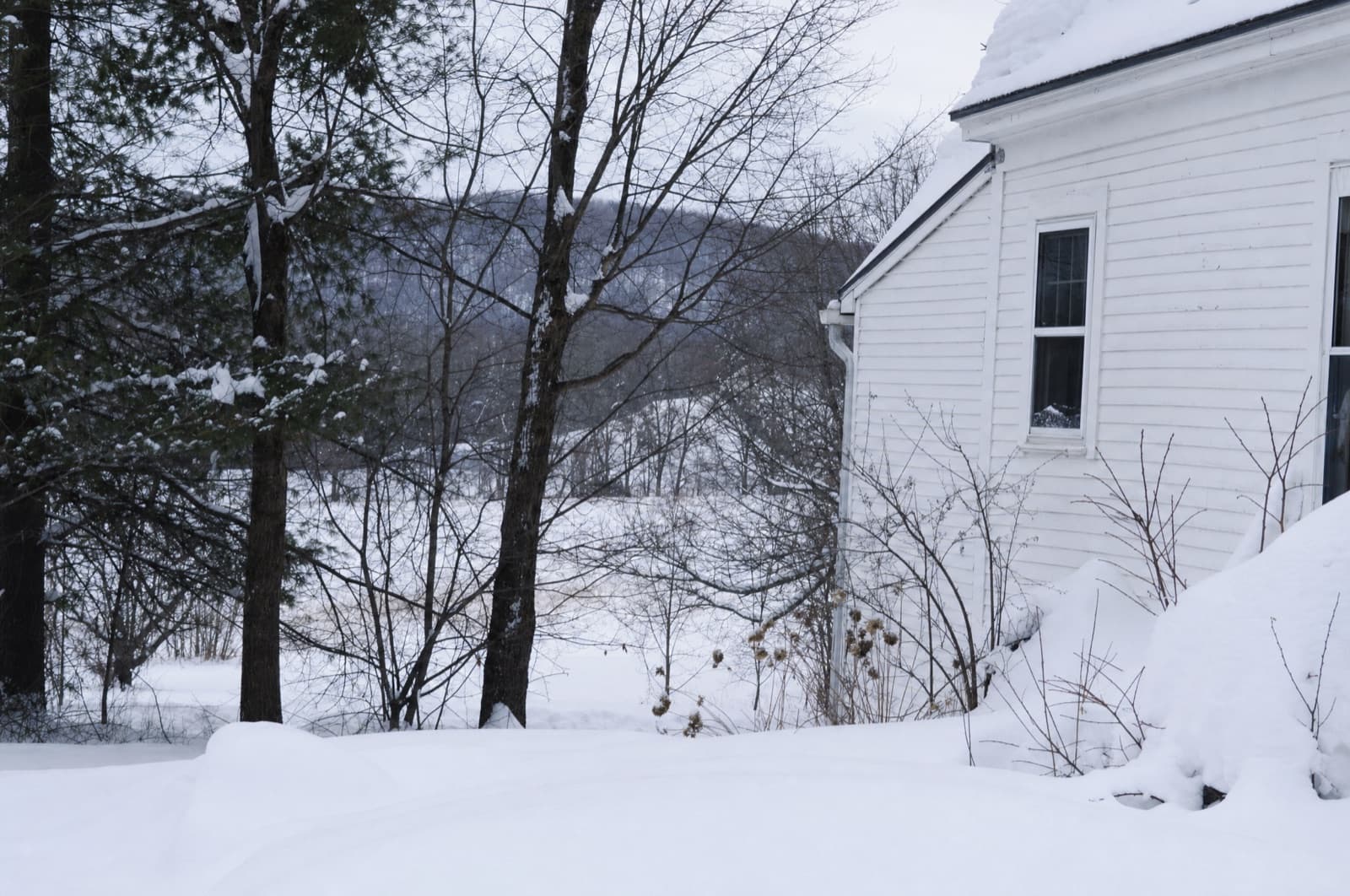
January in a New Hampshire yard
Daniel Brady · NH-Licensed Pesticide Applicator · License #782664
Reviewed by Daniel Brady

What Pests Are Actually Active in January in New Hampshire?

QuietAlmost nothing changed. That’s the answer, not a gap.
January is the quietest month on this calendar, and the honest answer is that almost nothing changed from December. Only one species turned up — raccoons, entering their winter mating season — and nothing turned down. Two species read as "at peak," cockroaches and squirrels, but neither is new: a heated home breeds German cockroaches year-round regardless of the weather outside, and squirrels are mid-way through a breeding peak that started before January did. Outdoors, the ground is frozen and nothing is entering from outside this month.

January at a glance

  • Species at peak: 2
  • Turned up: 1 newly active
  • Turned down: 0 winding down
  • The floor: 9 here year-round
  • ~40°F

    Adult blacklegged ticks can quest on any snow-free January day once temperatures rise above this

    UNH Cooperative Extension

  • 16 states

    Where the brown recluse spider is actually established — none of them in New England

    Penn State Extension

Where in the year

You are here · January

A pest year has a shape. This strip is the whole of it — the season you’re in, the months on either side, and the one you’re reading now.

The New Hampshire pest year
WinterYou are here · Jan
This monthSame seasonOther months2 at peak this month
The changelog

What changed in January

Not a list of seven pests re-served every month. A release log: what turned up, what wound down, what’s always here, and what isn’t here at all — 2 species at peak this month.

Turned up

newly active — more than last month

1
raccoonsActive

Raccoon mating season begins in January. Males range widely searching for mates, and a female scouting a den site — an attic, a chimney, a crawlspace — becomes more noticeable in deep winter than she was in December.

Do this · Scratching or thumping overhead at night is worth an inspection now. A denning female found before spring kits arrive is a simpler problem than one found after.

Turned down

winding down — you can stop worrying

Nothing wound down this month.

The floor

here every month — not this month’s news

9

These nine are in and around New Hampshire homes every month of the year, January included. They are not January news, and any calendar that lists them as this month's pests is padding a list. We know, because ours did.

  • birds

    Winter roosting continues in vents, eaves and chimneys regardless of the cold outside; resident birds don't leave, they just aren't nesting yet.

  • cockroaches

    German cockroaches breed continuously in a heated structure. Indoors, January is not meaningfully different from July.

  • fleas

    Outdoor stages are dormant in the cold, but fleas ride the host — a pet indoors keeps an indoor infestation running all winter.

  • mice

    House mice are already inside for the winter, breeding in wall voids and basements. The fall entry surge is behind them, not ahead.

  • moths

    Pantry and clothes moths breed on stored food and fabric in a heated building — a climate they never have to leave.

  • opossum

    Opossums do not go dormant for winter. They stay active, sheltering from the worst cold but still moving and foraging.

  • rats

    Norway rats shelter and continue breeding in walls, basements and crawlspaces through the winter, the same as mice.

  • squirrels

    Squirrels are mid-way through the first of two annual breeding peaks, using attics as a substitute for tree cavities.

  • ticks

    Adult blacklegged ticks quest on any day above about 40°F with no snow cover — rare in January, but not impossible.

Not here

our own old page said otherwise

3
  • Brown Recluse Spider

    Our old claim: Our own legacy January page listed the Brown Recluse Spider — the only month on the old calendar to name it.

    The brown recluse (Loxosceles reclusa) is not established in New Hampshire. Penn State Extension lists it as established in exactly sixteen states — Alabama, Arkansas, Georgia, Illinois, Indiana, Iowa, Kansas, Kentucky, Louisiana, Mississippi, Missouri, Nebraska, Ohio, Oklahoma, Tennessee and Texas — none in New England. A peer-reviewed ecological niche model (Saupe et al., PLOS ONE, 2011) places the species' range from Kansas east to Kentucky and south to Louisiana; even its projected future range under climate change reaches only Pennsylvania, Ohio and Michigan. A spider identified as a brown recluse in New Hampshire is almost always a harmless look-alike.

    Penn State Extension — brown recluse spiders (extension.psu.edu/brown-recluse-spiders); Saupe et al., PLOS ONE 2011 (ncbi.nlm.nih.gov/pmc/articles/PMC3064576/)

    What you actually have: Most likely a common harmless house spider. New Hampshire's actual resident spiders are covered on the timing guide's own spiders page.

  • Black Rat

    Our old claim: Our own legacy calendar listed the Black Rat on all twelve months, usually first — including January.

    The black rat (also called the roof or ship rat, Rattus rattus) is not established in New Hampshire. Its documented US range is warm and coastal — the lower East Coast, the Gulf States, the Pacific Coast and Hawaii — and in cooler regions it was displaced by the larger, more cold-tolerant Norway rat. We say not established rather than never recorded: isolated cargo introductions are documented elsewhere in the country, and we could not verify an occurrence count for this state. The honest claim is that there is no established population here.

    Internet Center for Wildlife Damage Management — roof rats (icwdm.org/species/rodents/roof-rats/); ScienceDirect — Rattus rattus displaced by Rattus norvegicus in temperate regions

    What you actually have: The Norway rat (Rattus norvegicus). If you have a rat in New Hampshire in January, that's the one — sheltering and still breeding indoors through the cold.

  • Boxelder Bugs

    Our old claim: Our own legacy calendar listed Boxelder Bugs on all twelve months, including January.

    Boxelder bugs are a fall-invader, spring-emergence species. By January, any boxelder bugs in a house are the same overwintering adults that entered last fall, dormant in wall voids — not a new population and not reproducing. UNH Extension notes they may stir briefly on a warm, sunny day, but that is last fall's arrivals waking up, not a January event.

    UNH Cooperative Extension — boxelder bug fact sheet (extension.unh.edu/resource/boxelder-bug-fact-sheet)

The bottom line — a quiet month
The quiet month — 2 species at peak, both already priced into winter

In January, the only pests that matter are the ones already living in your walls, attic or kitchen. Nothing new is coming in from the cold.

The calendar behind the calendar

Seasonal anchors

The sourced New Hampshire dates and thresholds that actually move the pest year — frost, moratoria, surveillance windows.

  1. 01

    Adult blacklegged (deer) ticks can quest whenever the temperature rises above about 40°F and there is no snow cover, including in January.

    A frozen January doesn't erase tick risk, it suppresses it. A mild, bare-ground day this month is still a tick day — just a rare one.

    UNH Cooperative Extension — biology and management of ticks in New Hampshire (extension.unh.edu)

The full picture

January, in plain terms

01

One thing turned up. Nothing turned down.

Raccoons are the only entry in this month's turned-up column. Mating season begins in January, and males start ranging widely in search of females — which is why a raccoon working its way along a fence line at 2 a.m., or a female testing an attic vent as a den site, gets noticed now in a way it didn't in December.

Nothing turned down, because almost nothing was doing anything different from November or December to begin with. That is not a gap in this page. It is the finding.

02

Two peak species, zero new activity

Two species are at peak this month — cockroaches and squirrels — and it would be easy to read that as "a busier month than it looks." It isn't. Both were already at this level before January started. German cockroaches breed continuously indoors because a heated building removes winter as a variable; there is no cockroach season, only a cockroach climate, and January sits inside it exactly like July does. Squirrels are in the middle of their first of two annual breeding peaks (the second comes in early summer), using attic cavities the way they'd use a hollow tree.

Everything else on this page is the floor: nine species that are in a New Hampshire home in January because they never really left.

The short version

Key takeaways

  • 01Only raccoons turned up this month, entering their winter mating season. Nothing turned down.
  • 02The two peak species — cockroaches and squirrels — were already at that level in December. Neither is new January activity.
  • 03The old calendar's January page named a Brown Recluse Spider, a Black Rat and Boxelder Bugs. None of the three belong on this page.
  • 04If you hear activity in an attic or chimney at night, it's worth an inspection before spring kits arrive, not after.

Hearing activity in the attic this month?

January's denning wildlife is worth a look before spring litters arrive. We serve southern and central New Hampshire from Manchester.

Common questions

Follow-up questions

The other half of this calendar

Already know what you’re dealing with?

This page is month-first — it answers “what changed in January?” Every species named here also has a species-first page in the timing guide: the same sourced facts, the full year, one species at a time. If you already know what you’re dealing with, that’s the faster route.

  • NH-licensed applicator · #782664
  • Same-day service
  • Family-owned since 2017

Sources & references

  1. UNH Cooperative Extension — biology and management of ticks in New Hampshire

    Adult blacklegged ticks quest above ~40°F without snow cover, even in winter

    extensionverified 2026-07-17
  2. Penn State Extension — brown recluse spiders

    Brown recluse established in exactly sixteen states, none in New England

    extensionverified 2026-07-17
  3. Saupe et al., PLOS ONE (2011) — ecological niche modeling of the brown recluse

    Present and projected future range of Loxosceles reclusa excludes New England

    academicverified 2026-07-17
  4. Internet Center for Wildlife Damage Management — roof rats

    Roof rat (Rattus rattus) US range is warm/coastal; displaced by Norway rat in cooler regions

    extensionverified 2026-07-17
  5. UNH Cooperative Extension — boxelder bug fact sheet

    Boxelder bugs overwinter dormant indoors and stir only briefly on warm days

    extensionverified 2026-07-17

Editorial disclaimer: This content is provided for informational purposes only and does not constitute pest control or medical advice. Every property is unique — consult a licensed professional for guidance specific to your situation. Anchor Pest Services is licensed in New Hampshire (#782664).

Written & reviewed by

Verified

Daniel Brady

NH-Licensed Pesticide Applicator · License #782664 (NHDAMF, RSA 430)

Daniel Brady is the New Hampshire–licensed applicator behind Anchor Pest Services, a family-owned pest control company serving the Manchester area since 2017.

Verify license

Last updated Jul 2026

A quiet month is still a good month to check

Get ahead of denning wildlife before spring

A raccoon or squirrel found now is simpler to handle than one found with young already present. Same-day service available across southern and central NH.

  • Family-owned in Manchester since 2017
  • NH commercial applicator #782664, category F1
  • We will tell you when the answer is to do nothing

NH License #782664 · No obligation · We answer in person